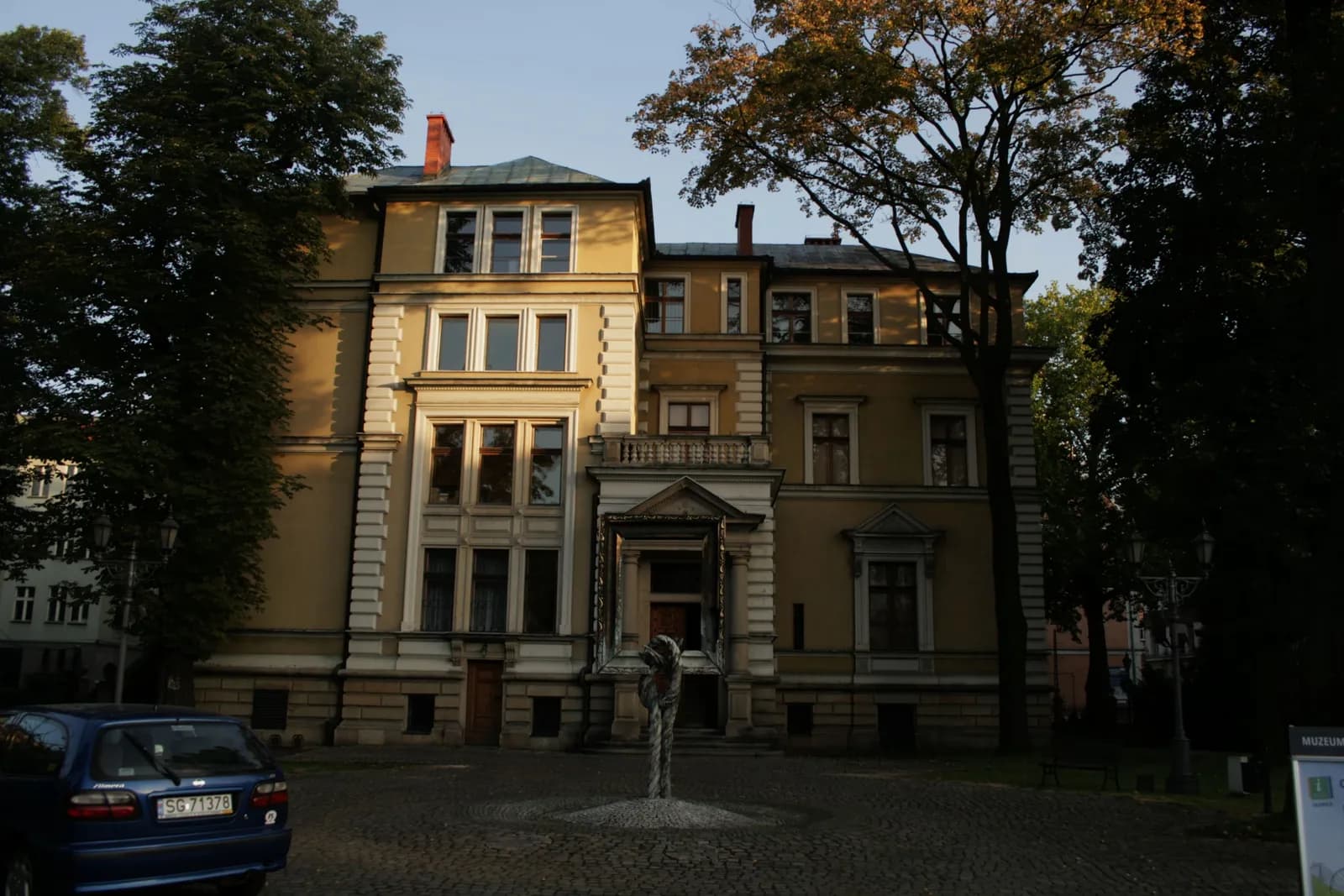
In Gliwice, one museum spreads across five very different sites, turning the city's architecture into part of the story it preserves.
A museum is often imagined as a single building filled with objects. In Gliwice, the idea is rather different. The Museum in Gliwice is spread across five branches, each occupying a place with its own history and character.
Together, they form an unusually varied way of understanding the city and Upper Silesia. A nineteenth-century industrialist's villa, a medieval building, a historic radio station, a former Jewish pre-burial house and an industrial site devoted to artistic casting each provide a different starting point for exploring the past.
The institution itself dates back to 22 March 1905, when it was established as the Upper Silesian Museum, or Oberschlesisches Museum. From the beginning, it was conceived as a regional museum, collecting and protecting objects connected with Upper Silesia. Since 1945 it has operated as the Museum in Gliwice.
Its collections now encompass archaeology, history, art and artistic craftsmanship, ethnography and photography, while its programme extends to temporary exhibitions, lectures, concerts, workshops and educational activities.
Five buildings, five ways of seeing the city
The best-known starting point is Willa Caro, the museum's headquarters. Built between 1882 and 1885 for industrialist Oscar Caro, the nineteenth-century residence retains much of its original architectural character, including decorated ceilings, panelling, parquet floors and original joinery. Its permanent exhibition recreates the residential interiors of Upper Silesian industrialists.
The villa also reveals something about the society that developed alongside Upper Silesia's industrial growth. Its collections extend beyond the building itself, including art glass, porcelain, Polish jewellery, ethnographic material and an important collection of Polish artistic photography.
A very different atmosphere can be found at the Piast Castle. The Gothic building dates back to the fourteenth century and has had a remarkably varied existence, serving at different times as an arsenal, prison and farmstead. Today it houses the museum's archaeology and history departments.
Its collections include archaeological finds from the region, guild objects, material relating to the Silesian uprisings and plebiscite, historical photographs and military objects. The permanent exhibition Gliwice – City of Many Cultures places the city's history within a broader story of cultural diversity.
From industrial craftsmanship to one of Europe's most recognisable wooden towers
The museum's industrial heritage becomes especially tangible at the Artistic Casting Department.
Located on Bojkowska Street, the branch explores Gliwice's tradition of artistic iron casting, particularly the work of the Royal Iron Foundry. The museum's collection includes around 2,000 artistic castings, while its permanent exhibition presents the history of artistic ironwork from the eighteenth to twentieth centuries.
The objects demonstrate how industrial production could extend into highly refined decorative work. The Royal Iron Foundry became known for cast-iron objects ranging from jewellery and medallions to household items and sculptural works. Examples in the museum include nineteenth-century candlesticks, portrait plaques and other pieces that connect industrial technology with artistic craftsmanship.
Then there is Radiostacja Gliwice, where technology and twentieth-century history meet.
The transmitter complex was completed in 1935 and includes the station building, residential buildings and its distinctive wooden antenna tower. The tower is 111 metres high and constructed from larch wood joined with thousands of brass screws. The site was entered onto Poland's list of Historic Monuments in 2017.
Radiostacja is also inseparable from the events of 31 August 1939, when a staged German attack on the station formed part of the propaganda preparations for the invasion of Poland. The museum documents the so-called Gleiwitz provocation and the murder of Franz Honiok, whose death was used to help create the appearance of Polish aggression.
The fifth branch, the House of Remembrance of Upper Silesian Jews, adds another essential dimension to the city's history.
The building originally served as a Jewish pre-burial house beside the Jewish cemetery, opening in 1903. After years of decline, it was restored and transformed into a museum branch in 2012. Its permanent exhibition, Jews in Upper Silesia, explores the history and contribution of the Jewish community from the Middle Ages to the present day.
The building itself is part of that story. Its original purpose, wartime use and later restoration make it a place for considering both Jewish life and the consequences of its destruction, while the museum also uses the space for dialogue, education and discussion about history and its influence on the present.
Taken together, the five branches show why the Museum in Gliwice cannot easily be reduced to one collection or one historical narrative. Its story runs from medieval fortifications to industrial modernity, from artistic craftsmanship to radio technology, and from the flourishing of Upper Silesia's Jewish community to the difficult history of war and persecution.
That diversity is precisely what makes the institution valuable. Instead of asking visitors to understand Gliwice from a single perspective, the museum allows the city itself to become the exhibition.
Visitor Information
Museum: Museum in Gliwice (Muzeum w Gliwicach)
The museum currently operates five main branches:
Willa Caro, ul. Dolnych Wałów 8a
Piast Castle, ul. Pod Murami 2
Gliwice Radio Station, ul. Tarnogórska 129
House of Remembrance of Upper Silesian Jews, ul. Księcia Józefa Poniatowskiego 14
Artistic Casting Department, ul. Bojkowska 37
The museum's current published opening hours for its branches are:
Monday: closed
Tuesday: 11:00–16:00
Wednesday: 11:00–18:00
Thursday: 11:00–18:00
Friday: 11:00–16:00
Saturday: 10:00–17:00
Sunday: 10:00–17:00
Individual branches may have specific arrangements, so visitors should check the official museum website before travelling.