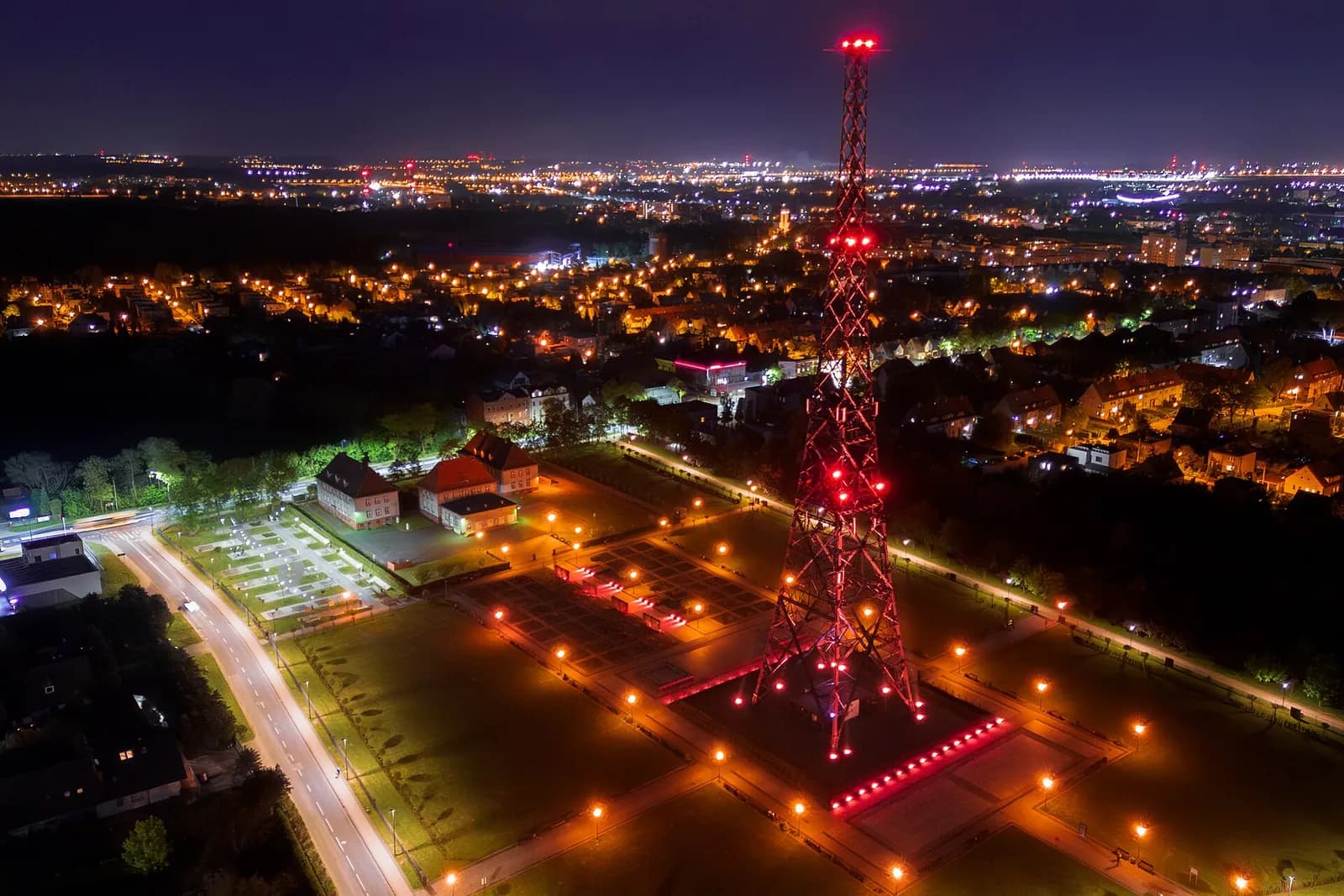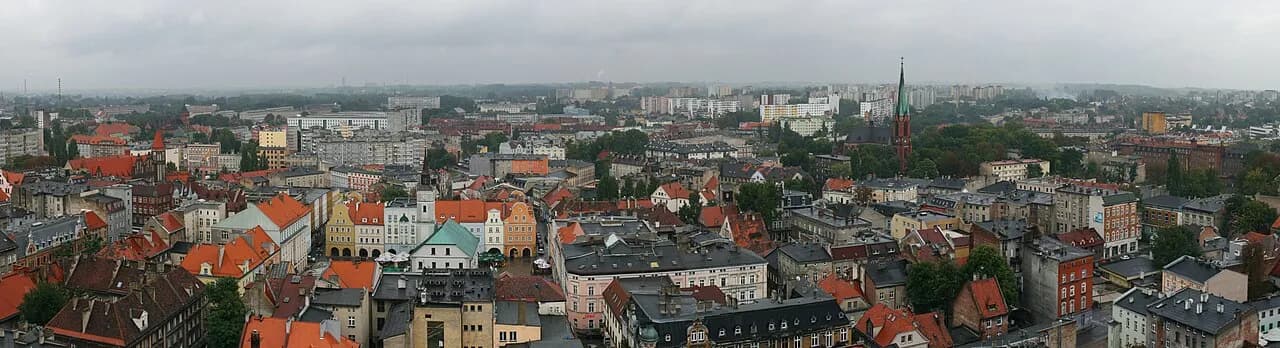
Gliwice is a city shaped by change. Located in the heart of Upper Silesia, it has developed through centuries of trade, industry, education and innovation. From its medieval beginnings as a small settlement on an important European trade route to its role today as a centre of technology and research, Gliwice’s history reflects the wider story of the region itself.
First mentioned in historical records in 1276, Gliwice grew thanks to its strategic location between Wrocław and Kraków. Its position along important trade routes helped establish the city as a place of commerce and exchange, while the granting of town rights by Duke Władysław Opolski of the Piast dynasty marked the beginning of its urban development.
Medieval Roots and Historic Landmarks
The history of Gliwice can still be seen in the streets and buildings of the city centre.
The remains of the medieval city walls and the Piast Castle are among the most important reminders of Gliwice’s early history. These landmarks reflect the city’s role as a fortified settlement and trading centre during the Middle Ages.
Other historic sites reveal the city’s long religious and cultural traditions. St Bartholomew’s Church, with origins dating back centuries, and the Armenian Church, which originally served as a hospital, are examples of Gliwice’s diverse architectural heritage.
Together, these buildings tell the story of a city influenced by different communities, traditions and periods of European history.
The Industrial Transformation of Gliwice
The biggest transformation in Gliwice’s history came with the rise of industry.
In 1794, the Iron Foundry of the Royal Prussian State was established, creating the foundations for large-scale industrial development. The city’s location and access to transport routes made it an ideal centre for manufacturing and trade.
Another important milestone was the construction of the Kłodnicki Canal, completed in 1812. Today known as the Gliwice Canal, this waterway connected the city with the Oder River and provided access towards the Baltic Sea.
The canal played a major role in the export of Silesian products and helped establish Gliwice as an important industrial and transport centre. It also contributed to the city’s reputation as one of the most significant inland ports in Poland.
A City Between Cultures and Borders
Like much of Upper Silesia, Gliwice has a complex and multicultural history.
Over the centuries, the city was influenced by Polish, Czech and German rule. In 1742, following changes in European politics, Gliwice became part of Prussia.
The 20th century brought further dramatic changes. After the Second World War, the city became part of Poland on 24 January 1945, beginning another important chapter in its development.
These historical shifts left a lasting mark on Gliwice’s identity, creating a city where different cultural influences remain visible today.
Education, Industry and New Opportunities
After the war, Gliwice entered a new period of development. The founding of the Silesian Polytechnic Institute in 1945, now known as the Silesian University of Technology, strengthened the city’s role as a centre of education, engineering and research.
The university continues to play an important part in shaping Gliwice’s modern economy by connecting education with innovation and industry.
In 1998, the arrival of the Opel Polska manufacturing plant became another significant moment in the city’s economic history, reflecting Gliwice’s continuing importance as a location for major industrial investment.
Gliwice Today: A Technological Future Built on History
Modern Gliwice combines its industrial traditions with a growing reputation as a centre of innovation.
Since joining the World Technopolis Association in 2005, the city has promoted its identity as a place where technology, science and business work together. Its universities, companies and research institutions contribute to the wider development of the Upper Silesian region.
However, Gliwice’s modern character does not replace its past. Instead, the city’s medieval streets, industrial landmarks and academic institutions exist alongside one another, creating a unique urban identity.
A City That Continues to Evolve
Gliwice’s journey from medieval trading town to modern innovation centre demonstrates the resilience of Upper Silesian cities.
Its history has been shaped by trade routes, industry, changing borders and technological progress. Today, Gliwice continues to build on this heritage, combining respect for its past with ambition for the future.